UNPUBLISHED MEDIA PRIVACY
Migrate Portfolio Drafts Safely
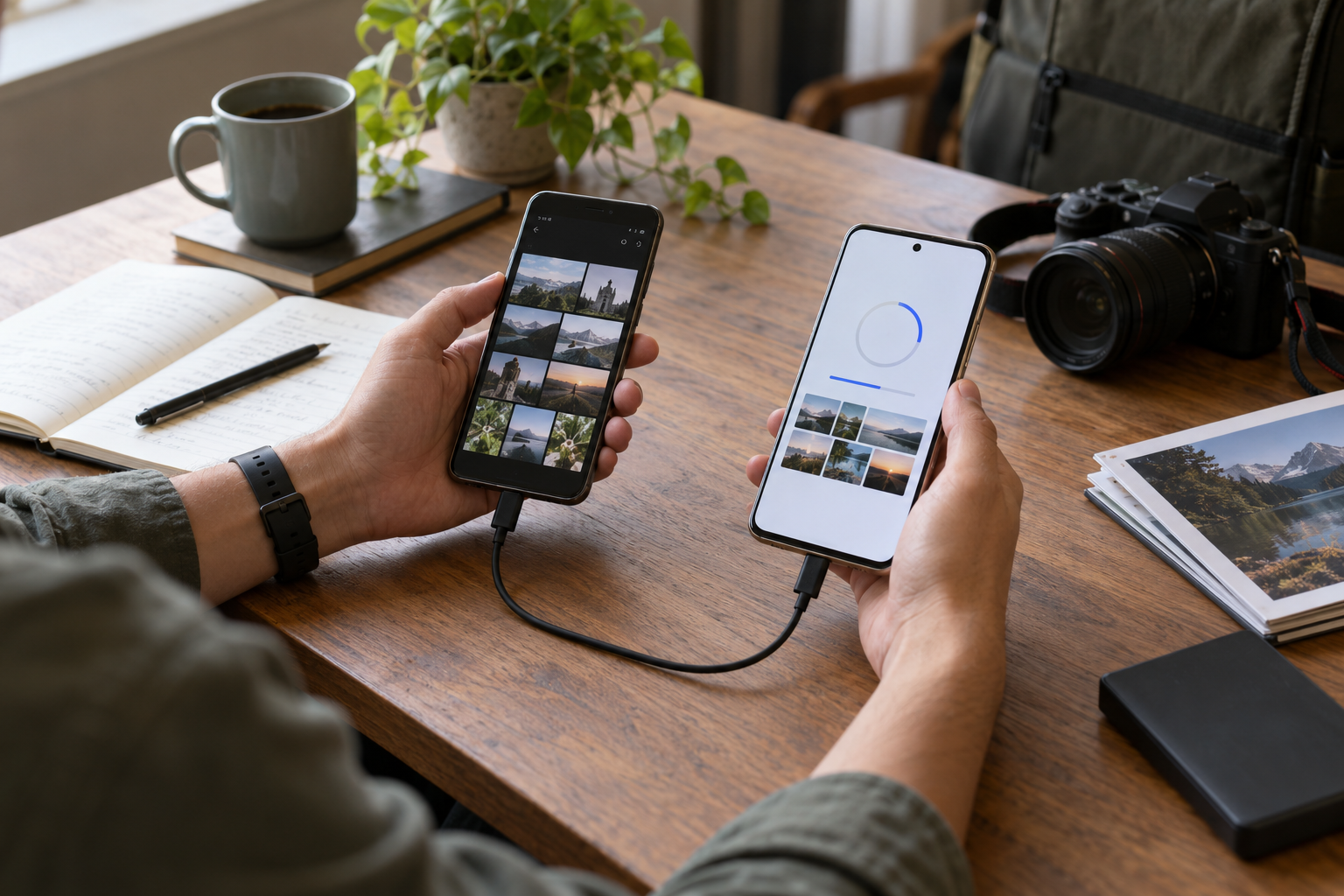
Test replacement-phone behavior without wiping or surrendering the original device too early.
01 / CONTEXT
Define the control decision
App data, local vaults, Android backup and exported media can migrate differently. Confirm the current official process with harmless media before selling, resetting or returning the old phone.
Test replacement-phone behavior without wiping or surrendering the original device too early.
02 / PROCEDURE
Run the control sequence
- 01
Back up originals and record the current device state.
- 02
Confirm the documented migration or export route.
- 03
Test with fictional media on the replacement phone.
- 04
Compare file counts, thumbnails, playback and metadata.
- 05
Retain the old phone until recovery evidence is complete.
03 / EVIDENCE
Preserve proof without personal data
A defensible privacy record identifies the phone owner, Android version, portfolio drafts, sensitive screens, device-lock state, app authentication, secondary-lock configuration, notification exposure, backup behavior, recovery owner and next review date. It should not contain real unpublished media, client drafts, client names, credentials or personal notes. Use a fictional demo profile during every technical test.
Recheck the arrangement after changes to Android, the media vault, Photo Video Locker, device security, notifications, biometrics, cloud backup, account recovery, permissions or shared-phone routines. Confirm both usability and recovery: the owner should enter the media vault when authorized, another phone user should meet the intended barrier, and the owner should recover access without depending on undocumented steps. Preserve unexpected behavior before changing controls.
Keep the claim narrow. A tested entry lock may reduce casual access to one Android application, but it does not encrypt the device, secure the creative account, approve client drafts, hide every notification or recent-app preview, detect malware, govern cloud copies, erase exports or guarantee recovery. Escalate those requirements to the Android, media-provider and account-security controls designed to meet them.
Ask a second tester to follow the written privacy procedure with fictional data. Record whether that person can identify sensitive screens, test the locked entry point, recognize notification exposure, find the recovery owner and explain what remains visible elsewhere. This usability check reveals hidden shortcuts, ambiguous recovery steps and unsupported assumptions before a phone, Android, media-vault or account change.
04 / BOUNDARY
State what the control cannot prove
Android transfer does not guarantee that every vault, credential, album, local database or deleted item will migrate.
Validate the exact Android version, device lock, media-vault authentication, notification settings, backup behavior and current Photo Video Locker release. If device encryption, account security, client draft authorization, malware protection, cloud-backup control or guaranteed recovery are required, select systems designed for those jobs rather than broadening a mobile-vault claim.
05 / SOURCES
Primary references
References support specific controls and do not imply endorsement.